
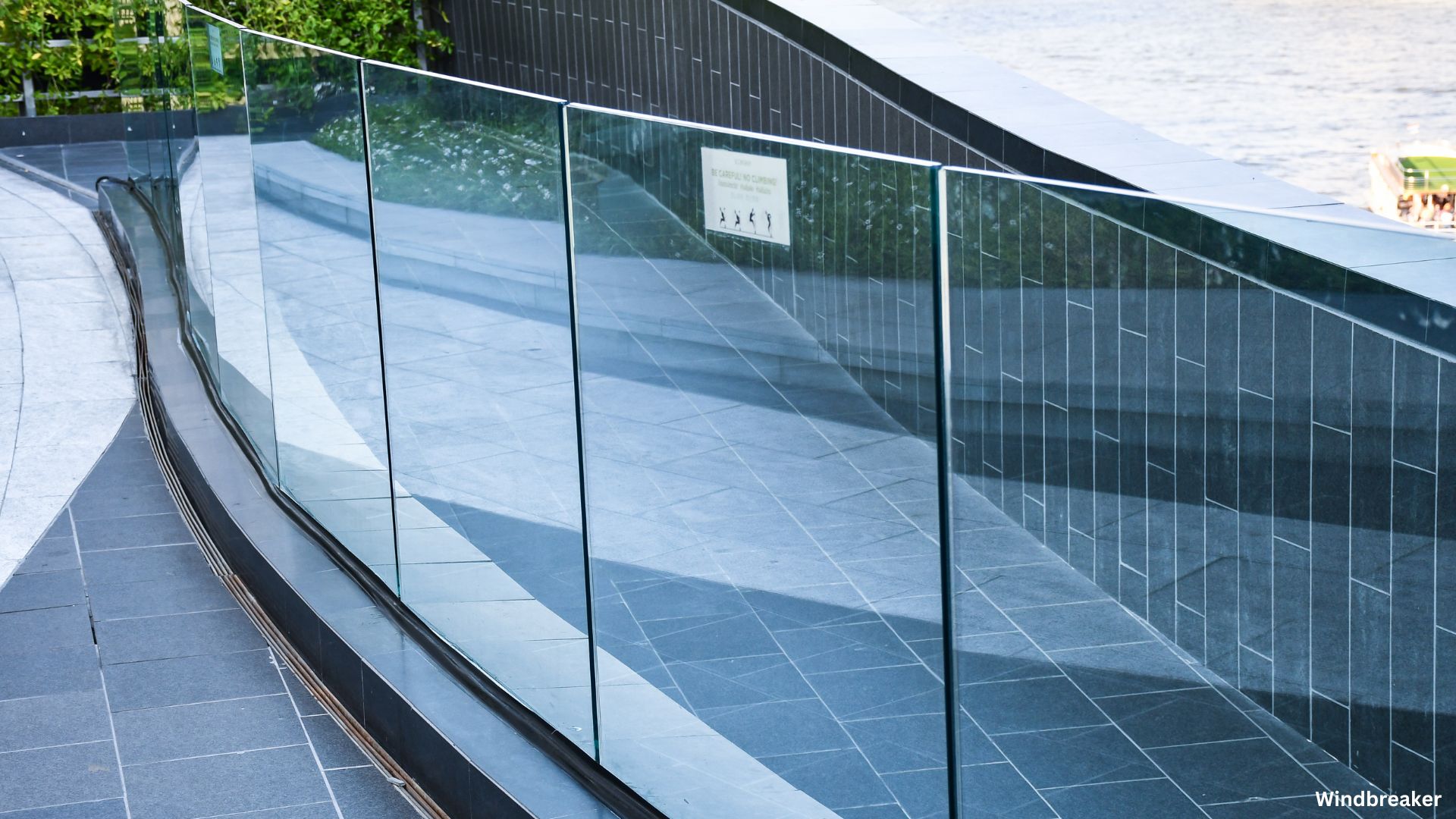
A glass windbreaker is a clear, often frameless glass panel system designed to shield patios, pergolas, terraces, and outdoor dining areas from wind while keeping views and daylight uninterrupted. Think of it as a see-through wall that tames gusts without closing off the space. Glass windbreakers come in fixed, sliding, retractable, and wheeled planter styles, making them adaptable to a wide range of pergola and outdoor living setups.
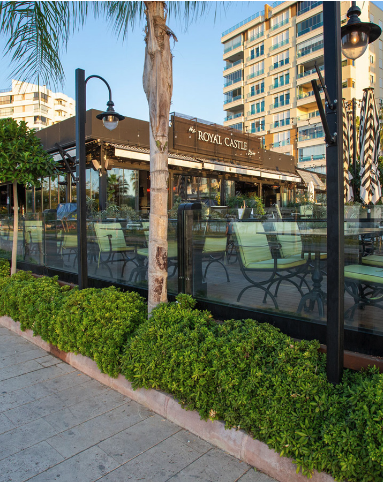
Why Choose a Glass Windbreaker for Your Pergola
Glass windbreakers are popular for pergolas because they preserve the open, airy feel that makes outdoor spaces inviting while significantly improving comfort. Key benefits include:
- Comfortable year-round seating by blocking drafts and light rain
- Minimal visual impact so landscaping, architecture, and views remain unobstructed
- Flexible operation with stackable, telescopic, retractable, or remote-controlled options to suit different needs and budgets
For restaurants and hospitality spaces, glass windbreakers can increase usable seating and help protect revenue by making terraces functional during windy or unpredictable weather. Many systems are designed with commercial use in mind and can be customized with branding or decorative finishes.
Types Of Glass Windbreakers
Understanding the main types helps you select the right solution for your pergola.
Fixed Glass Panels
Permanent panels anchored to the floor or structural posts. These systems are low maintenance and ideal where a constant wind barrier is required.
Sliding Or Stackable Systems
Panels glide along tracks and can be partially or fully opened. This option provides flexibility, allowing you to adjust airflow and access depending on the weather.
Retractable Or Telescopic Systems
Panels raise or lower vertically, sometimes using hydraulic assistance. A low glass barrier can transform into a tall wind screen when needed, then retract to restore open views.
Portable Wheeled Or Potted Glass Windbreakers
Self-contained glass panels set into weighted planters or wheeled bases. These are well suited for temporary layouts, pop-up spaces, or locations where permanent installation is not possible.
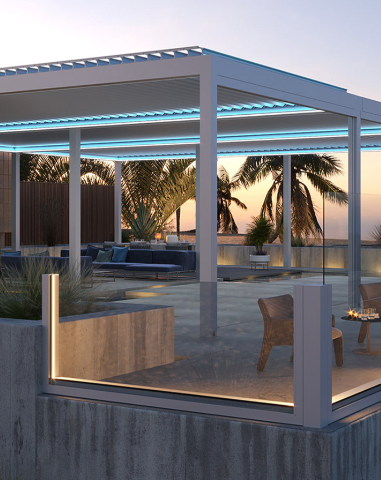
Glass windbreaker
How Glass Windbreakers Work
Although designs vary, most glass windbreakers rely on a few core engineering principles.
Tempered Safety Glass
Panels are made from tempered or laminated safety glass chosen for the system height, exposure, and local conditions. Tempered glass is impact resistant and breaks into small, safer fragments if damaged.
Tracks, Telescopes, Or Pistons
Sliding systems use tracks and rollers to allow smooth movement. Retractable and telescopic systems use interlocking profiles, pistons, or lifting mechanisms to adjust panel height and lock securely in place under wind loads.
Seals And Brushes
Rubber seals, brush strips, and drainage channels help reduce drafts, noise, and water intrusion. Proper sealing improves comfort while keeping maintenance manageable.
Anchoring And Weighting
Fixed systems are anchored directly to slabs or pergola structures. Portable systems rely on weighted bases or planters. Correct anchoring is essential for safety, especially in windy or coastal environments.
Installation Considerations
Choosing and installing a glass windbreaker requires attention to several practical factors:
-
Wind Loads and Local Codes
Glass thickness and anchoring must meet local building codes and wind load requirements. Commercial installations may require engineering approval. -
Pergola Integration
The system should integrate cleanly with pergola posts, rooflines, and drainage. Some designs are made specifically to work with pergola structures. -
Access and Operation
Consider how often panels will be moved and who will operate them. Manual systems are straightforward, while motorized or hydraulic options add convenience but require more upkeep. -
Maintenance
While tempered glass is durable, regular cleaning and inspection of tracks, seals, and fixings are important. Corrosion-resistant hardware is recommended in coastal areas.
Design Tips For Pergola Owners
- Use frameless or minimal-frame systems to maintain clear sightlines
- Match base materials and hardware finishes to your pergola for a cohesive look
- Add frosted glass or planter bases where privacy is needed without sacrificing light
- For commercial spaces, consider printed or branded glass panels to reinforce identity
Cost And ROI Snapshot
Costs vary based on system type, glass thickness, automation, and installation complexity. Portable systems are generally the most budget friendly. Retractable and motorized options require a higher initial investment but can deliver strong returns by extending the usable season and increasing seating capacity in hospitality settings.
Is A Glass Windbreaker Right For Your Pergola?
A glass windbreaker is a smart upgrade if you want to maintain the openness and natural light of an outdoor space while improving comfort in windy or changeable conditions. Whether you choose a fixed glass wall, a sliding system, a retractable lift, or a portable solution, modern glass windbreakers are designed to balance safety, performance, and visual appeal. For pergolas, the payoff is clear: more usable days outdoors and a space that stays connected to its surroundings.
If you are planning a pergola upgrade, selecting a glass windbreaker designed specifically for pergola integration and confirming wind load requirements with a professional can help ensure long-term performance and peace of mind.

